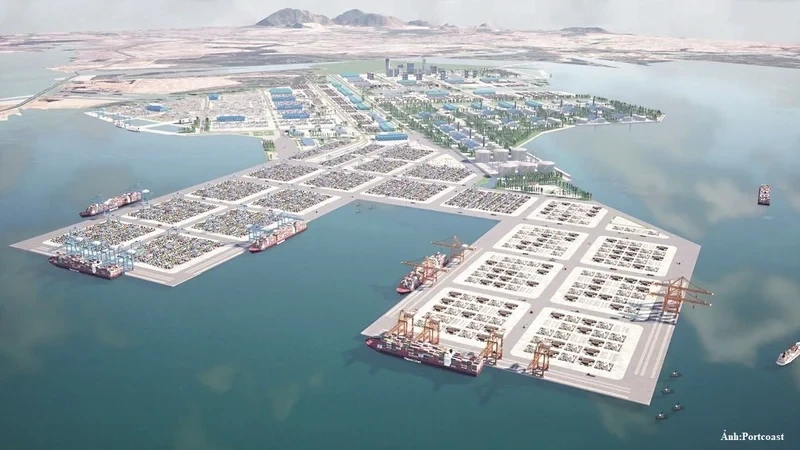

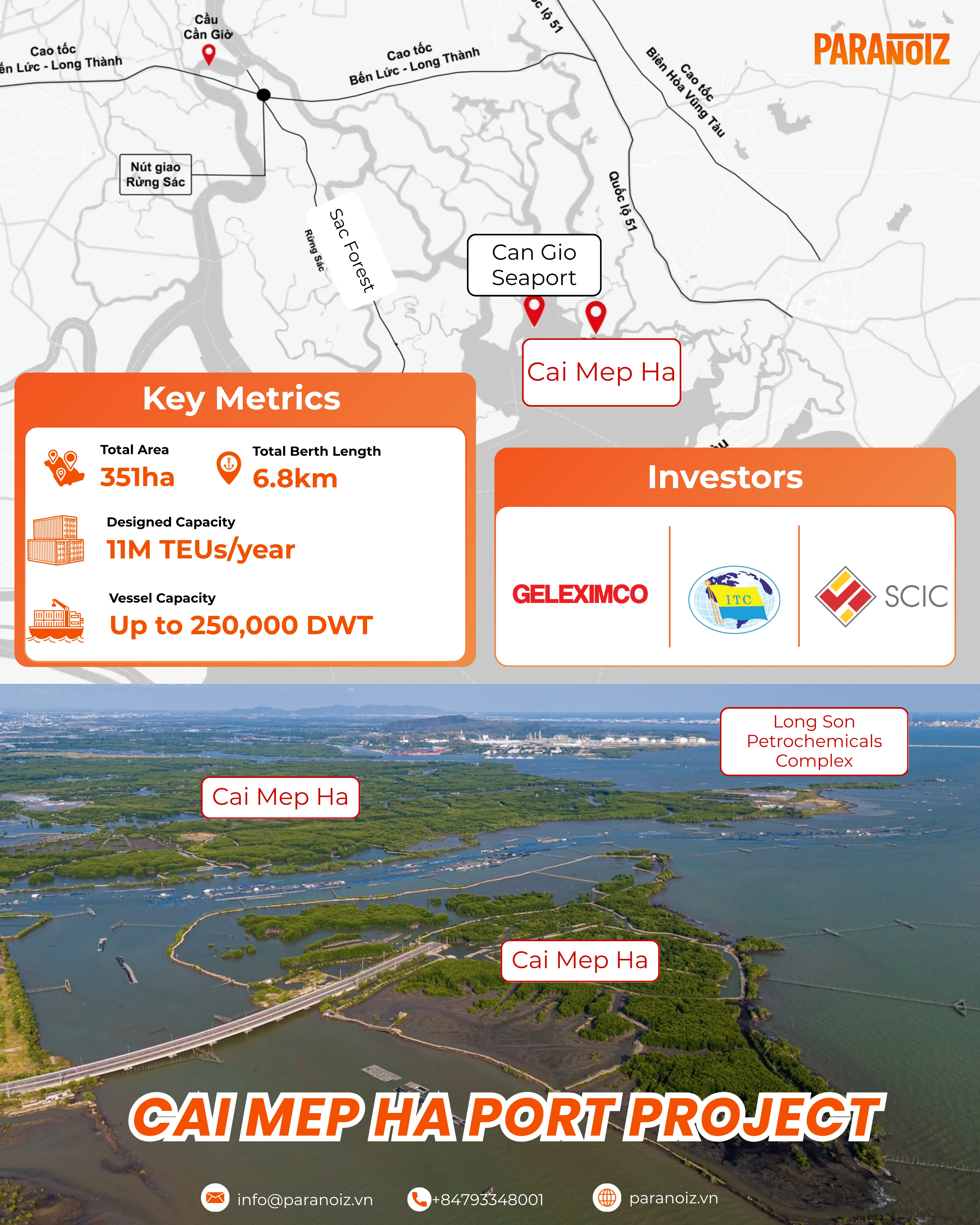
Cai Mep Ha is located within the Cai Mep – Thi Vai port cluster, one of the deepest natural port systems in Southeast Asia.
This is not just a geographic advantage - it is a structural one.
The depth of the port allows Cai Mep Ha to accommodate ultra-large container vessels and operate direct services to the US and Europe, bypassing traditional transshipment hubs such as Singapore and Hong Kong.
In practical terms, this shifts Cai Mep Ha from being a conventional gateway port to a potential regional transshipment and logistics hub.
At this scale, Cai Mep Ha stands among the most ambitious deep-sea port projects in Vietnam and the wider region.
The structure of the investor group provides important insight into how the project may unfold:
Together, this reflects a hybrid model of private sector agility combined with state-level strategic direction.
Ho Chi Minh City aims to position Cai Mep Ha as a Free Trade Zone (FTZ) port, a move that could significantly enhance Vietnam’s role in global trade and regional supply chains.
However, global experience shows that building an FTZ is not simply about designating land or offering incentives. Many projects fail to deliver real value because they stop at infrastructure.
Today, ports no longer compete on size alone. They compete on how effectively they orchestrate the flow of goods.
A successful FTZ port is not just a transit point - it is an integrated system where cargo is anchored, processed, and redistributed.
For Cai Mep Ha to move from ambition to impact, the surrounding ecosystem will be critical:
Without these elements, Cai Mep Ha risks becoming a high-capacity port that primarily feeds external transshipment hubs. With them, it has the potential to evolve into a true logistics hub shaping regional trade flows.
The Cai Mep Ha port project is more than a large-scale infrastructure investment.
It reflects Vietnam’s broader strategy to reduce dependency on foreign transshipment hubs and strengthen its position in global supply chains.
For investors, logistics providers, and manufacturers, this signals a shift in where value will be created in Southeast Asia — from pure manufacturing to supply chain control and flow management.

Vstream is a research-led media platform delivering in-depth analysis and decision-focused insights on Vietnam. Access full reports and exclusive insights curated for serious decision-makers.
Go to Vstream