
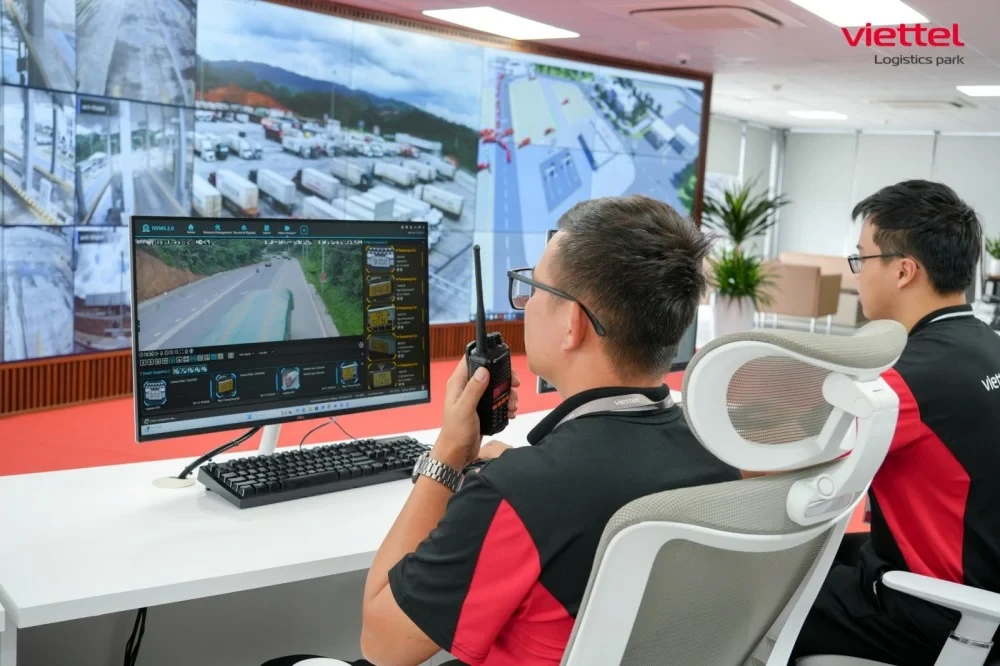
At the 2026 Lao Cai Investment Promotion Conference, the Lao Cai Provincial People's Committee formally awarded Viettel Post investment approval for the Smart Border Gate project at the Kim Thanh Road Bridge crossing, part of Lao Cai International Border Gate. The project covers 7.87 hectares and will be developed in three phases from Q2/2026 through Q4/2032, with initial facilities entering operation in 2027.
The physical infrastructure includes an operations center, scanning and inspection facilities, cargo transfer and supervision zones, an import cargo staging and monitoring area, and an express delivery center - with full multimodal connectivity to road, rail, and expressway networks in the surrounding logistics corridor. The design is explicitly oriented toward high-throughput, low-friction processing: facilities are planned to be interoperable across transport modes and scalable over the project's six-year development timeline.
The technology architecture is the more significant investment. Viettel Post has outlined plans to deploy AI, IoT, and automation systems across vehicle coordination, cargo monitoring, traffic flow management, and border clearance support. The intended outcome is a unified digital platform connecting customs authorities, port operators, and private enterprises - enabling real-time visibility of cargo status, vehicle position, and processing progress. Manual clearance steps are replaced with electronic procedures; data is shared across stakeholders under a standardized framework rather than exchanged through parallel, fragmented systems.
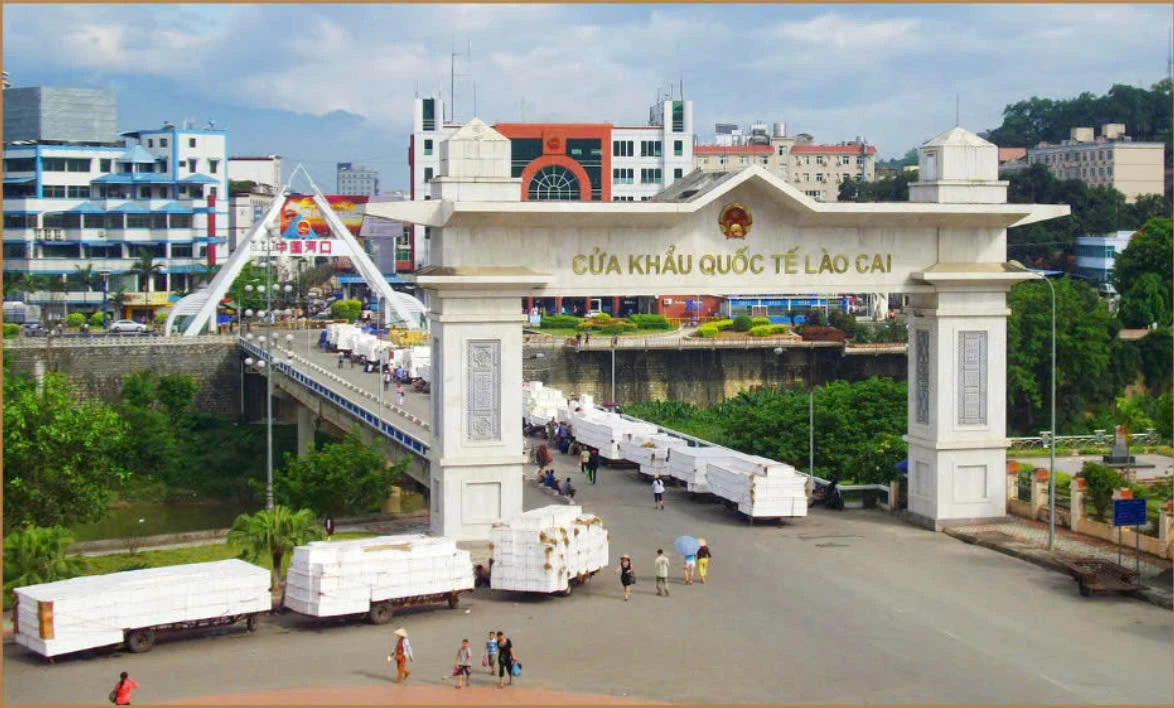
Lao Cai occupies a specific and structurally important position in Vietnam's trade infrastructure. It represents the shortest land connection between Vietnam and Yunnan Province, the gateway to Southwest China's production and consumer base. The Kim Thanh crossing is the primary road bridge on this corridor, handling bilateral trade flows that have grown significantly as Vietnam–China commercial ties have deepened.
At the 2026 Investment Promotion Conference, Deputy Prime Minister Ho Quoc Dung stated directly that Lao Cai holds all the conditions required to develop into a logistics hub for northern Vietnam, and identified border logistics infrastructure as one of the province's primary growth drivers. The Smart Border Gate project is the most concrete step taken toward that designation to date.
For companies with supply chains that cross the Vietnam–China border - whether importing inputs for manufacturing or exporting finished goods northward - the efficiency of the Lao Cai crossing is a direct operational cost variable. Clearance delays, manual documentation requirements, and fragmented data systems translate into inventory holding costs, scheduling uncertainty, and reduced supply chain responsiveness. The digitization of Kim Thanh addresses these constraints at the infrastructure level rather than through incremental process improvements by individual operators.
The project also reflects a deliberate expansion of Viettel Post's role within Vietnam's logistics ecosystem. The company - part of the Viettel Group, Vietnam's largest telecommunications and technology conglomerate - has historically operated as a postal, express delivery, and logistics service provider, with a nationwide warehouse and sortation network and existing cross-border logistics capabilities. The Smart Border Gate project moves it into infrastructure ownership and operation: designing, building, and running the physical and digital platform through which other logistics operators and trading companies will process their cross-border flows.
This repositioning from service provider to infrastructure operator has precedent in Vietnam's logistics market - most notably in port and industrial zone development, where operators have increasingly sought to own the underlying infrastructure rather than simply provide services on top of assets controlled by others. Viettel Post's entry into border gate infrastructure, backed by Viettel Group's technology capabilities, represents a similar logic applied to the cross-border segment.
Vietnam's total trade value is on track to exceed $1 trillion in 2026 for the first time, with China remaining the country's largest trading partner by a significant margin. Infrastructure that reduces the friction and cost of moving goods across that bilateral corridor will find demand well ahead of its completion timeline.


Vstream is a research-led media platform delivering in-depth analysis and decision-focused insights on Vietnam. Access full reports and exclusive insights curated for serious decision-makers.
Go to Vstream